|
|||||||
|
 |
|
|||||


FirstMerit Corporation and Subsidiaries

 |
|
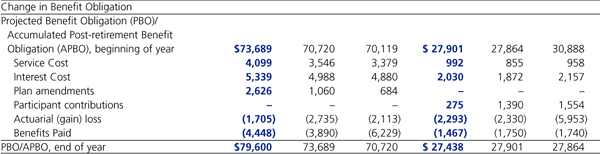
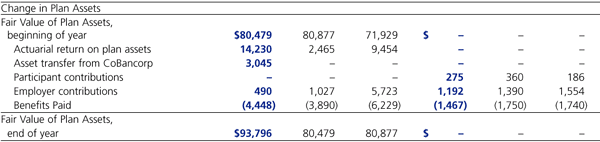
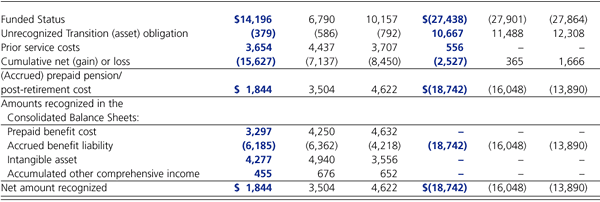
The Corporation has a defined benefit pension plan covering substantially all of its employees. In general, benefits are based on years of service and the employee’s compensation. The Corporation’s funding policy is to contribute annually the maximum amount that can be deducted for federal income tax reporting purposes. Contributions are intended to provide not only for benefits attributed to service to date but also for those expected to be earned in the future. A supplemental non-qualified, non-funded pension plan for certain officers is also maintained and is being provided for by charges to earnings sufficient to meet the projected benefit obligation. The pension cost for this plan is based on substantially the same actuarial methods and economic assumptions as those used for the defined benefit pension plan. The Corporation also sponsors a benefit plan which presently provides post-retirement medical and life insurance for retired employees. The cost of post-retirement benefits expected to be provided to current and future retirees is accrued over those employee’s service periods. Prior to 1993, post-retirement benefits were accounted for on a cash basis. In addition to recognizing the cost of benefits for the current period, recognition is being provided for the cost of benefits earned in prior service periods (the transition obligation). The Corporation reserves the right to terminate or amend the plan at any time. The following table sets forth the both plans’ funded status and amounts recognized in the Corporation’s consolidated financial statements.
|