|

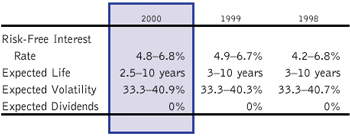
The Black-Scholes
option valuation model was used to calculate the fair market value of
the options at the grant date for the purpose of disclosures required
by FAS 123. The following assumptions were used in the calculation:
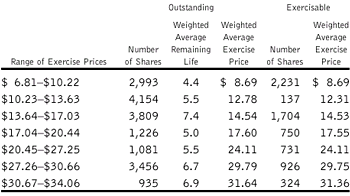
The following table
summarizes the information regarding stock options outstanding at January
28, 2001 (number of shares in thousands):
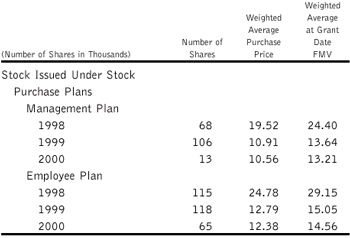
A summary of the
information relative to the Company’s stock purchase plans follows:
Note
12 – Financial Instruments
The Company enters
into interest rate swap and collar agreements to reduce the impact of
changes in interest rates on its variable-rate debt and amounts outstanding
under the Lease Facility. The swap agreements are contracts to exchange
variable-rate for fixed-interest payments periodically over the life of
the agreements without the exchange of the underlying notional amounts.
The collar agreements are contracts to effectively limit the variability
of interest on a portion of the Company’s variable-rate debt. The
notional amounts of these agreements are used to measure interest paid
or received and do not represent the amount of exposure to credit loss.
As of January 28,
2001, and January 23, 2000, the Company had the following interest rate
instruments in effect:
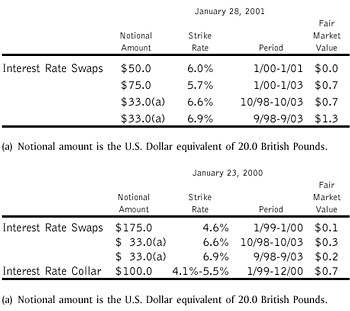
During fiscal 2001,
the Company entered into interest rate swaps with notional amounts of
$50.0 and $100.0, which effectively converted variable rate U.S. dollar-denominated
borrowings to fixed rates of 5.1% and 5.2%, respectively. These swap agreements
expire one year from the date the Company entered into the agreements.
Note
13 – Segment Information
The Company is organized
based upon the following operating segments: domestic Borders stores,
international Borders and Books etc. stores, Walden stores, online retailing
through Borders.com, and other (consisting of interest expense and certain
corporate governance costs).
The accounting policies
of the segments are the same as those described in the ‘‘Summary
of Significant Accounting Policies.’’ Segment data includes
charges allocating all corporate headquarters costs to each segment. Transactions
between segments, consisting principally of inventory transfers, are recorded
primarily at cost. The Company evaluates the performance of its segments
and allocates resources to them based on anticipated future contribution.
Amounts relating to All Wound Up have been reclassified from the Waldenbooks
segment to discontinued operations.
|


