|
6.
Stock Option Plan Pro forma information regarding net income and earnings per share is required by SFAS No. 123, and has been determined as if the Company had accounted for its employee stock options under the fair value method of SFAS No. 123. The fair value for these options was estimated at the date of grant using a Black-Scholes option pricing model with the following weighted-average assumptions: risk-free interest rates of 4.5%; dividend yields of zero; volatility factors of the expected market price of the Company’s common stock of .358 for fiscal 2001, .483 for fiscal 2000 and .507 for fiscal 1999; and a weighted-average expected life of the option of one to five years. |
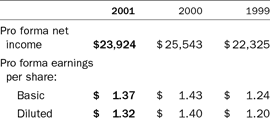
The Black-Scholes option valuation model was developed for use in estimating the fair value of traded options which have no vesting restrictions and are fully transferable. In addition, option valuation models require the input of highly subjective assumptions including the expected stock price volatility. Because the Company’s employee stock options have characteristics significantly different from those of traded options, and because changes in the subjective input assumptions can materially affect the fair value estimate, in management’s opinion, the existing models do not necessarily provide a reliable single measure of the fair value of its employee stock options. For purposes of pro forma disclosures, the estimated fair value of the options is amortized to expense over the options’ vesting period. The Company’s pro forma information follows (in thousands except for earnings per share information):
|