





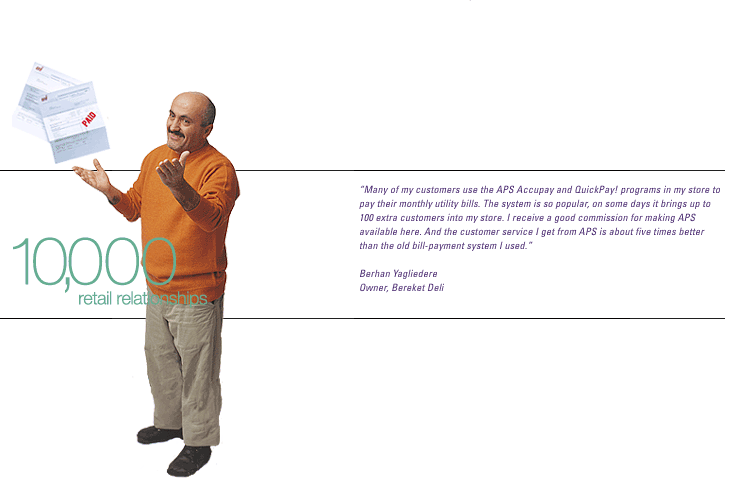


utility earnings waned from the previous year, our other businesses nearly offset this dip. So, while the economy had an impact, it was held in check by the nature of our utility business, which brings in fairly stable kilowatt-hour sales. The coming year’s economic predictions are ambiguous and we’ll be watching carefully. With Xcelecom, for instance, we’ll be watching how orders come in during the first part of the year to help us shape our expectations. The market for acquiring additional companies remains robust, so if there’s an opportunity to add value, we won’t miss it. APS’s market — the lower 15% of income earners — could very well expand if the economy continues to stress this population.
 Can
you summarize the business philosophy and approach that UIL will take throughout
2002?
Can
you summarize the business philosophy and approach that UIL will take throughout
2002?
 We’re here to meet
the needs of our customers and our communities in a very responsible fashion.
We’re here to meet
the needs of our customers and our communities in a very responsible fashion.
We will continue to do it through a well-trained and engaged work force.
We’ll strive to be the best provider of service to our customers, and
we’ll strive to deliver the highest return to those who have invested
in us. Our company and subsidiaries will continue to focus on how we do our
work, on changes in the markets we serve and on understanding our customers.
We will work to help shape policy that affects UIL and its customers. Our
dividend will continue to be supported by cash flow coming out of our utility,
while a greater portion of future earnings will flow out of our growing non-utility
holdings. All of these factors are constants, no matter where the economy
is going. They are the bedrock of next year’s numbers.
 Message to
Shareowners
Message to
Shareowners