

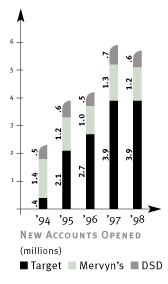
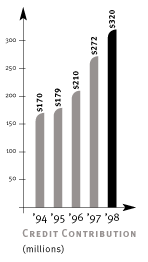
 We offer proprietary credit in each of our business segments. These credit programs strategically support our core retail operations and are an integral component of each business segment. The programs contribute to our earnings growth by driving sales at each of our business segments and through growth in credit contribution. Therefore, credit contribution, shown below, is reflected in each business segment's pre-tax profit on a receivables serviced basis. Because we service both the retained and sold securitized receivables, we manage our portfolio on a serviced basis. In contrast, our consolidated financial statements reflect only our retained securitized receivables.
In 1998, pre-tax contribution from credit increased 18 percent over the prior year, compared to the 6 percent growth in average receivables serviced. The improved credit performance reflects continued growth of the Target Guest Card, along with strong revenue increases associated with changes in credit terms and expansion of our guest loyalty programs at all three divisions.
In 1999, we plan to continue to grow guest credit's contribution by acquiring new accounts, enhancing guest loyalty programs, controlling bad debt expense and leveraging operating expenses.
|
|
|
|
|||
 | ||||||
| Credit Contribution | ||||||
| (Millions of Dollars) | 1998 | 1997 | 1996 | |||
| ||||||
| Revenues: | ||||||
| Finance charge and late fee revenues | $ 576 | $ 501 | $ 403 | |||
| Merchant fees and other | 93 | 86 | 72 | |||
| ||||||
| Total revenues | 669 | 587 | 475 | |||
| ||||||
| Expenses: | ||||||
| Bad debt | 180 | 190 | 149 | |||
| Operations and marketing | 169 | 125 | 116 | |||
| ||||||
| Total expenses | 349 | 315 | 265 | |||
| ||||||
| Pre-tax contribution | $ 320 | $ 272 | $ 210 | |||
| ||||||
|
|
|
|
|
|
|
| ||||||
| Average Receivables Serviced | ||||||
| (Millions of Dollars) | 1998 | 1997 | 1996 | |||
| ||||||
| Target | $ | 803 | $ | 644 | $ | 453 |
| Mervyn's | 764 | 812 | 799 | |||
| DSD | 720 | 707 | 663 | |||
| ||||||
| Total average receivables serviced | $ | 2,287 | $ | 2,163 | $ | 1,915 |
| Total year-end receivables serviced | $ | 2,496 | $ | 2,424 | $ | 2,184 |
| ||||||
 Merchant fees are the fees charged to our retail operations on a basis similar to fees charged by third-party credit cards. Merchant fees, including deferred billing fees charged for carrying non-revenue-earning revolving balances, are intercompany transfer prices that are eliminated in consolidation. Operations and marketing expenses are those associated with the acquisition, retention and servicing of accounts.
The year-end allowance for doubtful accounts was $203 million, 8.1 percent of year-end receivables serviced, an increase of 1.2 percentage points from the prior year.
|
|
 |
 |