|
|
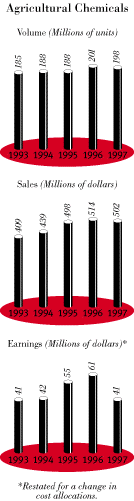
In 1997, the Agricultural
Chemicals business reported sales of $502 million, down 2
percent from 1996. Earnings of $41 million were 25 percent
lower than 1996 results, after an adjustment for a one-time
gain in 1996 from a land sale in Japan.
Unfavorable currency swings in
Western Europe and Japan, weather-related lower demand for
Dithane fungicide in all regions except Latin America, and
slower-than-anticipated growth for newer compounds accounted
for the decline.
T here also were successes during the year.
An improved formulation for Goal herbicide resulted in
strong growth as it found use on expanded acres of perennial
crops in the western U.S., and new crop registrations.
Sales of turf and ornamental
products grew, most notably for Dimension herbicide. Mach 2
insecticide, a molt accelerating compound (MAC), developed
by RohMid L.L.C. (a joint venture with American Cyanamid),
has been cleared by regulatory agencies in more than 40 U.S.
states and is poised for commercialization in 1998.
In 1997, the U.S. EPA classified
Confirm insecticide as a reduced-risk pesticide for use on
nine new crops. Review of the pending applications will be
expedited, in keeping with the EPA's efforts to accelerate
the availability of safer pesticides, and could yield new
registrations in 1998 and 1999. Sales of Confirm outside the
United States increased in 1997, with significant increases
in Australia, Brazil, Canada and Italy.
A formal distribution agreement was
signed between Rohm and Haas and Bayer for the marketing of
crop protection chemicals in India, including Dithane
fungicide. Elsewhere in the Asia-Pacific region, Rohm and
Haas Japan and Sanyo Trading Company merged their
agrochemical divisions into a new entity known as AgLead.
Rohm and Haas also introduced its newest fungicide,
thifluzamide, for commercial use on Korean rice.
|
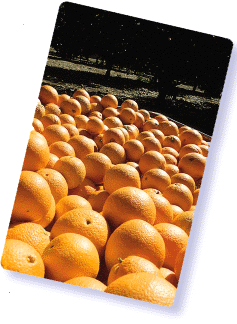
Rohm
and Haas products help bring healthy fruit to
market.
|
|
|
Karathane
miticide was a consistent performer throughout Europe, while
Mimic insecticide continued to gain acceptance in the
region's southern markets. In Latin America, Goal herbicide
showed good growth for use on Brazilian cotton and
sugarcane, and on Colombian rice.
During the year a work group was
formed to study the global implications of biotechnology,
and to evaluate how Rohm and Haas can bring value to this
emerging field in research, alliances, and existing product
development.
Excellent progress was made toward
achieving an injury-free workforce. The Agricultural
Chemicals business showed a 37 percent improvement in its
safety record, and exceeded the overall corporate
average.

Above: Rohm and Haas's fungicides, herbicides and
insecticides help improve the yield on niche crops --
everything from roses and grapes to oranges and
wheat.
|