



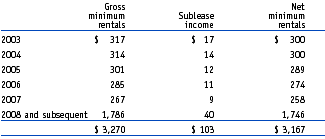
Minimum rental commitments under noncancelable operating leases having a term of more than one year as of February 1, 2003 are as follows:
 Total rent expense, net of sublease income, was $267, $261 and
$291 in 2002, 2001 and 2000, respectively. The company remains contingently liable for lease payments related to the sub-lease of locations to third parties. To the extent that sub-lessees fail to
perform, the company's total net rent expense would be increased.
Total rent expense, net of sublease income, was $267, $261 and
$291 in 2002, 2001 and 2000, respectively. The company remains contingently liable for lease payments related to the sub-lease of locations to third parties. To the extent that sub-lessees fail to
perform, the company's total net rent expense would be increased.
The company's new corporate headquarters facility, located in Wayne, New Jersey, is financed under a lease arrangement commonly referred to as a "synthetic lease." Under this lease, unrelated third parties, arranged by Wachovia Development Corporation, a multi-purpose real estate investment company, will fund up to $125 for the acquisition and construction of the facility. Upon completion of the construction, which is expected to be in 2003, the company will begin to pay rent on the facility until the lease expires in 2011. The rent will be based on a mix of fixed and variable interest rates that will be applied against the final amount funded. Upon expiration of the lease, the company would expect to either: renew the lease arrangement; purchase the facility from the lessor; or remarket the property on behalf of the owner. The lease agreement provides the lessor with a residual value guarantee equal to the funding for the acquisition and construction of the facility. Under accounting principles generally accepted in the United States, this arrangement is required to be treated as an operating lease for accounting purposes and as a financing for tax purposes.