SECTION: HOUSING PRODUCTS AND MARKET  

MARKET SHARE LEADERS
SINGLE-SECTION MANUFACTURED HOUSING MULTI-SECTION MANUFACTURED HOUSING
     CLAYTON28.5%  
     CLAYTON18.7%  
     FLEETWOOD 20.7%  
     FLEETWOOD18.1%  
     CHAMPION9.9%  
     CHAMPION 14.8%  
     SOUTHERN ENERGY4.1%  
     PALM HARBOR6.7%  
     GILES3.6%  
     SKYLINE6.1%  
Source: Statistical Surveys Inc., Year-End 2005 Statistics

MEETING AMERICA'S NEED FOR AFFORDABLE HOUSING
     The manufactured housing industry shipped 146,744 homes in 2005, a 12 percent improvement over the prior year. This increase was driven by the delivery of approximately 21,000 houses built to government specifications to assist the victims of Hurricanes Katrina and Rita. In 2004, 130,802 houses were shipped, including about 4,000 FEMA houses. All in all, when the industry's efforts to provide temporary housing are taken into consideration, shipments have essentially remained at or near 40-year lows for the past three years.
     The manufactured housing industry has provided affordable housing to American families for decades. In the 1920s, factory-built trailers were often used to meet temporary housing needs. Housing shortages after World War II led to families using this inexpensive housing, which could be relocated if new job opportunities were found.
     Fleetwood began making "house trailers" in 1950 and, as the industry matured, so have our products. The Department of Housing and Urban Development introduced national building standards and a federal oversight program in 1976, creating manufactured housing as it is defined today. Fleetwood homes boast high standards of quality, safety, durability, functionality, and appearance.
     According to the U.S. Census Bureau, there were 8.8 million manufactured homes in 2000, representing almost 8 percent of all housing. This growth occurred as potential homeowners discovered that manufactured homes offered improved quality, design, and available features, while retaining their significant price advantage. During the 1990s, financing terms became increasingly attractive. Regrettably, that trend was carried to an extreme, and undisciplined lending practices prevalent in the late 1990s led to a high incidence of borrower defaults and repossessions. As a consequence, lenders retreated from our industry.
     Over the past three years, the default rate has fallen and the inventory of repossessed homes has declined significantly. These factors appear to have contributed to the stabilization of annual shipments. We are beginning to see signs of an increase in lending activity—an effort led by local and regional lenders as well as some national finance companies—and are optimistic that additional financing resources for our customers, at a reasonable cost, would result in a significant improvement in industry volume. Affordable, quality housing is scarce in the United States, and yet in high demand; Fleetwood is in an excellent position to provide it.

INCREASING EFFICIENCY AND CUSTOMER SATISFACTION
     Our Housing Group generated $795.6 million in revenues, a 1 percent increase over the prior year, when revenues were
$785.5 million. Operating income improved more than sixfold from $6.4 million in fiscal 2005 to $38.8 million in fiscal 2006.
     For the most part, Fleetwood Homes operates locally, with three regional offices having a high level of autonomy. This allows regional and local plant teams to design homes that fit the style and needs of residents within their geographic area and to provide plant-based sales and service. Regional authority also means that decisions affecting our associates, dealers, and consumers are made quickly.
     Our customer satisfaction ratings have improved over the last year, which we believe is attributable to the increase in local and regional autonomy. Fleetwood sought improved efficiencies by implementing centralized service in the Housing Group a few years ago, but any advantages were overshadowed by higher indirect costs and a loss of communication between the people servicing the product and those manufacturing it. With that direct communication reinstated, any recurring problems can be dealt with much more quickly. In addition, more efficient service management and elimination of the centralized call centers have already produced cost savings. Finally, the strict discipline of an objective, visual quality inspection of each completed home before shipment has been extremely effective in reducing warranty claims. As a result of these initiatives, service and warranty costs have declined steadily each quarter throughout the fiscal year.
     The sales organization has also been reorganized to encompass plant-based teams that sell the homes that are built by their plant. Consequently, salespeople have better firsthand knowledge about the floor plans, features, and options that they represent.
     We are working diligently to replace the volume that was lost following the sale of Fleetwood Retail Corp. (FRC), our largest customer. At the time of the sale, FRC handled about 16 percent of all Fleetwood retail sales, a portion of which has been lost as a result of the closure by the buyer of some of our former stores. In addition, year-over-year sales comparisons have been adversely affected by a drop-off in the purchase activity of a few sizeable community operators. Over the past couple of years, Fleetwood sold nearly 10 percent of its home production to community operators. This year, management changes and revised business plans at those companies have caused them to reduce their purchases significantly.


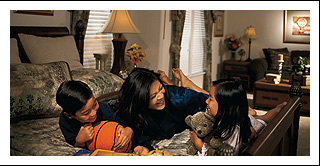
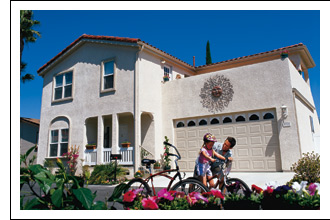
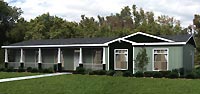
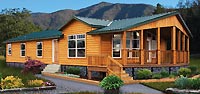
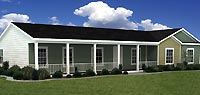
More local autonomy allows us to create homes that are suited to our customers' geographic style and needs.

OFFERING TEMPORARY AND PERMANENT HOUSING SOLUTIONS
     The Housing Group participated in providing housing units for people displaced by the hurricanes in the Gulf Coast. Manufactured housing is well-suited for this purpose because the industry can gear up quickly to provide large quantities of nearly identical homes. A consequence of this effort, however, was that images of these homes were widely broadcast and frequently printed in the media, raising a concern that a portion of the public may now equate a "manufactured house" to this relatively spartan and unattractive temporary housing, rather than to the reality of a modern manufactured home.
     Fleetwood is working with the industry to combat this misconception, and we have had two successful housing shows in the Gulf Coast region. We are convinced that factory-built housing is the best solution for the massive rebuilding effort needed in the area and we are actively communicating with the government, local municipalities, developers, media, and consumers to ensure that the public is educated about the advantages and attractiveness of manufactured and modular housing.
     Meanwhile, we continue to work with our dealer network to provide affordable housing to American families of all ages and sizes. In recent years, Fleetwood has also successfully marketed manufactured homes to the military and municipalities. Military housing includes barracks or other on-base housing projects, while municipal work includes urban infill. For example, we worked with the City of Bellflower in Southern California to turn a blighted trailer park into an attractive community of two-story, 1,125-square-foot homes.