Today, the retail division has 126 Company-operated sales centers. While we have closed unprofitable locations, we also opened a handful of sales centers in geographically desirable locations over the past few years, and plan to open at least 10 new locations in the coming year. The centralization initiative was successful, as all centers and the Houston headquarters use the same systems, procedures, and operating platform. We set ourselves apart from other retailers by offering consistent training of FRC managers and staff, including classes on financing programs and mandatory general manager training that focuses on operational excellence.
We took steps during fiscal 2004 to more closely integrate the wholesale and retail divisions through changes in personnel, structure, and functions. The wholesale and retail sales organizations and marketing teams were consolidated through management changes under one senior officer who has overall responsibility for housing distribution. We held an inaugural sales meeting earlier this year that brought all of the FRC general managers and our wholesale sales team together to exchange ideas and discuss best practices.
Meanwhile, the investment in our financing arm continued, and we launched the finance organization in 2002. We are now carefully building a portfolio of loans, balanced between the need for high performance and the desire to provide financing for customers who have not been able to secure a loan for their manufactured homes. This “make-sense” lending has been successful.
HomeOne has originated over $55 million in loans to date, adding $33 million during fiscal 2004. At the end of the year, the company was recording a 30+-day delinquency rate of less than 1 percent. Delinquencies have remained low due to a focus on originating quality assets, employing aggressive collection techniques at the first sign of problems, and leveraging the retail organization to facilitate collection activities. The investment that participating Pinnacle retailers have in the financial performance of their loans also aligns performance between the two.
In December 2003, Fleetwood established a warehouse lending facility for HomeOne with Greenwich
Capital. We expect to accelerate HomeOne’s gradual growth with this short-term funding in place, and
continue to invest in our technology and people – an investment dedicated to improving operating
efficiency and effectiveness.
MOVING OUTSIDE OUR TRADITIONAL MARKET OPENS NEW DOORS
The unusually slow traditional market for manufactured housing has prompted research into new markets. For example, we formed a team focused on developing relationships with manufactured housing communities. Substantially increased business from national community operators was developed almost immediately as a result of the focused efforts we have directed toward this increasingly important segment of the overall housing market. Additionally, Fleetwood’s new executive director of global business development is pursuing international opportunities and other special projects, along with possible new distribution channels and markets.
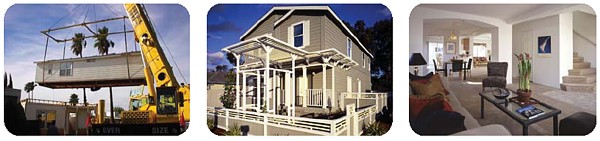
Fleetwood also began exploring the possibility of using manufactured housing for urban infill projects. The lower cost, faster setup, and lack of neighborhood disruption when compared to site-built housing makes it an attractive alternative. Zoning laws in many areas, however, necessitate that we gain cooperation from local governments, and so we are working to do so in various areas. Six of our housing plants were certified to build modular homes built to the UBC (Uniform Building Code) rather than the HUD code. UBC homes are often not subject to the same zoning and financing restrictions.
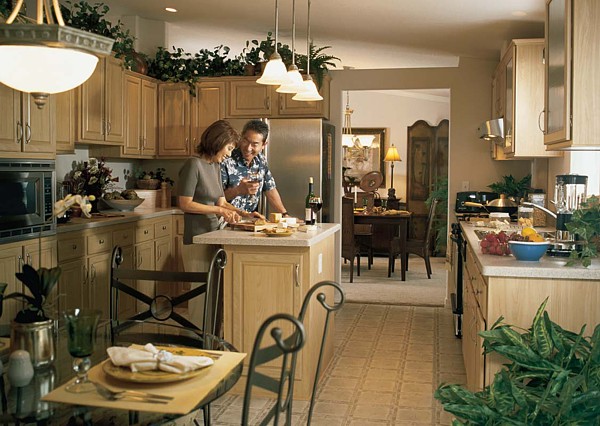
We also are working to build houses that appeal to specific populations. Our LifeStages homes, for example, are constructed to make it easier for people to stay in their homes during various life changes. The lever door handles, for instance, make it possible to open doors while holding a load of groceries or if arthritis makes turning a doorknob difficult. Wider doorframes and lower light switches and sinks also add flexibility. We continue to research the requirements and tastes of other growing groups, such as immigrant populations, that are potential markets for our homes.
Traditional business remains the core competency of the Company, and we are ready to capitalize on the recovery of the industry. One of the houses we developed in 2001, our Entertainer home, continues to do well and inspire imitators. The house, which is built around the concept of an open floorplan with a central great room complete with entertainment center, continues to be the best-selling home in America.
We are pleased to report that Housing sales increased 21 percent in the final quarter and backlogs were up 80 percent over the prior year as fiscal 2004 drew to a close. In fact, in June 2004 we announced that we were re-opening a plant in Georgia to meet growing demand in that region. By first opening plants such as this one, which is adjacent to an existing operating facility, we have the advantage of being able to run the new plant using the same management team. We have seven other idle plants with similar circumstances. All in all, we believe that when the market turns, we will be in an exceptional competitive position to take advantage of the increased need for manufactured housing.
|


