15. EMPLOYEE BENEFIT PLANS
Pension
We maintain qualified noncontributory
defined benefit pension plans covering substantially all utility
employees. Pension benefits are based on years of service and the
employee’s compensation during the five highest paid consecutive
years out of ten before retirement. Our policy is to fund pension
costs accrued, subject to limitations set by the Employee Retirement
Income Security Act of 1974 and the Internal Revenue Code. We also
maintain a non-qualified Executive Salary Continuation Plan for
the benefit of certain officers.
Post-retirement Benefits
We accrue the cost of post-retirement
benefits, primarily medical benefit costs, during the years an employee
provides service.
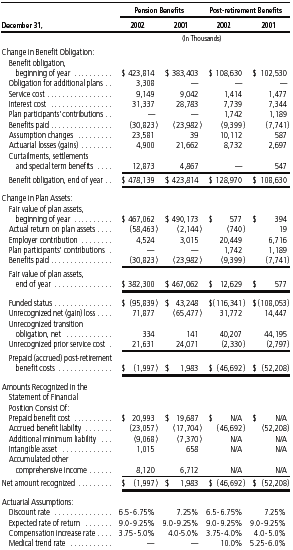
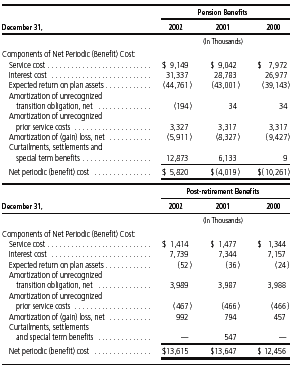
The following tables summarize the status
of our pension and other post-retirement benefit plans:
|
|
In selecting an assumed discount rate,
fixed income security yield rates for 30-year Treasury bonds and
corporate high-grade bond yields are considered. The assumed rate
of return on plan assets is based on long-term returns forecast
for the type of investments held by the plan.
Pension plan assets are primarily made
up of equity and fixed income investments. The market value of the
plan assets has been affected by declines in equity markets. At
December 31, 2002, the fair value of pension plan assets was $382.3
million. Actual return on plan assets declined by approximately
$2.1 million during 2001 and by approximately $58.5 million during
2002. Absent a substantial recovery in the equity markets, pension
costs, cash funding requirements and the additional pension liability
could substantially increase in future years.
For measurement purposes, an annual health
care cost growth rate of 10% was assumed for 2002, decreasing by
1% per year to 5% in 2007 and thereafter. The health care cost trend
rate has a significant effect on the projected benefit obligation.
Increasing the trend rate by 1% each year would increase the present
value of the accumulated projected benefit obligation by $2.2 million
and the aggregate of the service and interest cost components by
$0.2 million. A 1% decrease in the trend rate would decrease the
present value of the accumulated projected benefit obligation by
$2.2 million and the aggregate of the service and interest cost
components by $0.2 million.
Savings Plans
We maintain savings plans in which substantially
all employees participate, with the exception of Protection One
and Protection One Europe employees. We match employees’ contributions
up to specified maximum limits. Our contributions to the plans are
deposited with a trustee and are invested in one or more funds,
including the company
|


