












|
|
|
|
|
|
|
|
|
| ||||||||
| ||||||||
|
|
|
|
|
| Next |  |
|||
| ||||
|
|
|
|
|
|
|
 |
||||||
 |
||||||
AFLAC Japan — Signs of Strength in a Difficult Market2001 proved to be a challenging year for AFLAC Japan. We entered the year prepared for a more competitive, deregulated insurance market. And we again faced a troubled economy, with Japan entering its third recession in the last 10 years. To maintain our strong market position, we developed new products, forged a strategic marketing alliance with a leading Japanese insurer, maintained our expense advantages, and emphasized our financial strength to Japan's insurance consumers. Despite our many competitive strengths, we did not achieve the sales objectives we had set early in the year. However, we significantly outsold our competitors — both new and old — in our core cancer life product line. As a result, when 2001 ended, AFLAC remained in exactly the same position as when the year started — the number one provider of supplemental insurance products sold at the worksite. And our products continued to be regarded as the best in the market. More importantly, due to our strong persistency rates, our revenues and earnings grew and met our expectations. Here are some results for the year in yen terms.
|
  |
|||||
 | ||||||
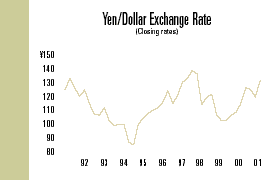
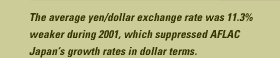
The Impact of Currency ChangesDue to the size of AFLAC Japan, our financial statements are affected by fluctuations in currency values. However, it's important to note that when we prepare financial statements for our shareholders, we do not actually convert currencies from Japanese yen to U.S. dollars. Instead, we translate AFLAC Japan's yen-based income statement into dollars using the average exchange rate for the reporting period. For this reason, AFLAC is generally unaffected in economic terms by changes in the yen's value. However, the yen's relative strength or weakness can distort our reported results. When the average yen/dollar exchange rate is stronger than in the preceding year, AFLAC Japan's growth rates are magnified in dollar terms. When the average yen/dollar exchange rate is weaker than in the preceding year, our growth rates in dollar terms are less than in yen terms. In 2001, the yen averaged ¥121.54 to the dollar, compared with an average of ¥107.83 in 2000. The 11.3% weakening of the yen in 2001 suppressed our reported results in dollars, which can be seen in the results below.
|
  |
|||||
|
|
|
|
|
| ||||
| Go to page 2 of 4 | |
|||
| ||||
|
Annual Report Home
Contact Information
Site Map
Download this Report
AFLAC.com |
|
|
| ||