|
 |
The BD EpiCenter Microbiology
Data Management System
interfaces
seamlessly with existing
laboratory
information systems and
various BD microbiology systems. |
 he BD EpiCenter Microbiology Data Management System
and the instruments it coordinates could define the
integrated microbiology laboratory of the future. For infection
control administrators, pharmacists and other medical staff,
the BD EpiCenter system provides exclusive data analysis that
allows these professionals to monitor trends in their facilities
and communicate information about these trends. From the
hospital's perspective, it links the laboratory to medical decisions
by improving the quality of information coming from
the laboratory. The technology helps to curtail the spread of
drug-resistant "superbugs"–a growing problem for clinics and
hospitals–through rapid detection and diagnosis, providing
clinical solutions to medical professionals. he BD EpiCenter Microbiology Data Management System
and the instruments it coordinates could define the
integrated microbiology laboratory of the future. For infection
control administrators, pharmacists and other medical staff,
the BD EpiCenter system provides exclusive data analysis that
allows these professionals to monitor trends in their facilities
and communicate information about these trends. From the
hospital's perspective, it links the laboratory to medical decisions
by improving the quality of information coming from
the laboratory. The technology helps to curtail the spread of
drug-resistant "superbugs"–a growing problem for clinics and
hospitals–through rapid detection and diagnosis, providing
clinical solutions to medical professionals.
One of the instruments supported by the BD EpiCenter
system is the BD Phoenix Automated Microbiology System.
Marking one of the most significant instrument launches
for BD since the introduction of the BD ProbeTec ET system
in 1998, the BD Phoenix system was introduced in the U.S.
and Japanese markets in late 2004 following a 2001 launch
in Europe.
The BD Phoenix system offers several competitive advantages,
beginning with full automation requiring minimal
manual intervention and the ability to deliver direct, reportable
answers. In addition, BD's multi-parameter determination
(MPD) technology enables the BD Phoenix system to identify
more than 300 organisms–about 50 percent more than
our competitors– with further expansion set for 2005. The
BD Phoenix system also offers technology for detecting emerging
antibiotic resistance through real-time biological testing,
which can help contain the spread of infectious diseases within
an institution.
A wider range of tests continues to drive worldwide
growth of the BD ProbeTec ET system and solidify BD's
position as the global leader in amplified testing. BD received
U.S. FDA clearance for Legionella pneumophila in 2004. In
2005, BD plans to expand its tests for atypical pneumonia
to include Mycoplasma pneumoniae and the Chlamydiacea
family in Europe. Amplified atypical pneumonia tests provide
additional diagnostic information to enable doctors to
continue or modify therapy. Using tests may also reduce
costs (for pharmaceuticals, length of hospital stay, testing
and sample collection), lower the rate of antibiotic resistance
and improve patient outcomes. These molecular respiratory
tests should complement the BD ProbeTec ET assays for
M. tuberculosis and other mycobacteria, which have been
sold outside the U.S. since 2000.
In late 2005, BD plans to launch the next-generation
BACTEC system, the BD BACTEC LX Microbial Detection
System. This system is designed to offer greater organism
recovery, faster time-to-detection, improved workflow, and
greater efficiency and flexibility.
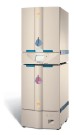
| BD is developing its
next-generation blood
culturing instrument,
the BD BACTEC LX
Microbial Detection
System, which will
utilize state-of-the-art
laser technology
and magnetic sample
agitation. |
 |
|
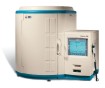
The BD Phoenix
Automated Microbiology System rapidly
identifies the bacteria infecting a patient
and directs optimal therapy. It was launched
in the U.S. and Japan in late 2004. |
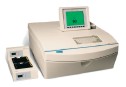
Applications for
the BD ProbeTec ET
system are expanding
with U.S. FDA
clearance of a diagnostic test for Legionella
pneumophila and the launch of three tests for
atypical pneumonia in Europe and Asia-Pacific. |
 |
A patient whose condition
is diagnosed rapidly
and specifically can be
treated more efficiently
and, hopefully, will
recover more quickly
and fully than if the
diagnosis is delayed.
The BD EpiCenter
Microbiology Data
Management System is
designed to be the
information core of the
advanced microbiology
laboratory. To provide
hospitals with rapid
results despite today's
shortage of microbiologists,
the system
streamlines specimen
processing and facilitates
the consistent
analysis of results from
multiple technologists.
Capturing, analyzing
and presenting microbiology
data in a timely
manner enables physicians,
pathologists
and infection control
personnel to rapidly
identify–and act
against–emerging epidemiology
trends. |
|
|
|
|