Notes to Financial
Statements
NOTE 16—Income Taxes
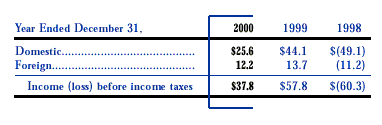
The domestic and foreign components of income (loss) before
income taxes are as follows (in millions):
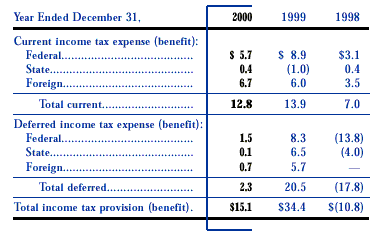
The components of the income tax provision (benefit) are as
follows (in millions):
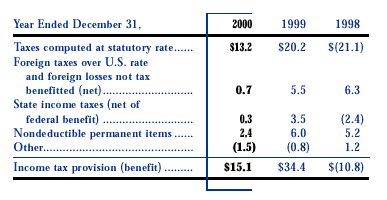
The principal items accounting for the differences in taxes
on income (loss) computed at the applicable U.S. statutory rate
and as recorded are as follows (in millions):
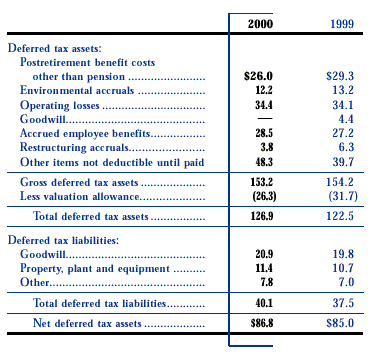
The tax effects of temporary items that gave rise to significant
portions of the deferred tax accounts are as follows at December
31 (in millions):
Deferred tax assets include the benefit of net operating loss
carryforwards subject to appropriate valuation allowances. The
Company evaluates the tax benefits of operating loss carryforwards
on an ongoing basis taking into consideration such factors as
the future reversals of existing taxable temporary differences,
projected future operating results, the available carryforward
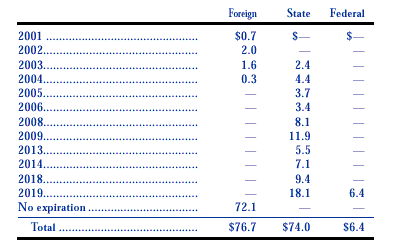
period and other circumstances. At December 31, 2000, the Company
had accumulated net operating loss carryforwards for tax purposes
expiring as follows (in millions):
SFAS No. 109 requires that deferred tax assets be reduced by
a valuation allowance if it is more likely than not that some
portion or all of the deferred tax asset will not be realized.
The valuation allowances at December 31, 2000 and 1999 predominantly
represent allowances against foreign net operating losses which
are not anticipated to result in future tax benefits.
Undistributed earnings of the Company's foreign subsidiaries
amounted to approximately $28 million at December 31, 2000.
Upon distribution of those earnings in the form of dividends
or otherwise, the Company would be subject to both U.S. income
taxes (subject to an adjustment for foreign tax credits) and
withholding taxes payable to the various foreign countries.
The Company intends to periodically make distributions from
its foreign subsidiaries to its U.S. parent. These distributions
will only be made at such time that they are deemed to be tax
efficient. The Company does not anticipate any additional U.S.
tax liability above that which has previously been recorded.
Fisher and its former parent are parties to a Tax Sharing Agreement
that provides for (i) the payment of taxes for periods during
which Fisher and its former parent were included in the same
consolidated, combined or unitary group for federal, state or
local income tax purposes, (ii) the allocation of the responsibility
for the filing of tax returns, (iii) the cooperation of the
parties in realizing certain tax benefits, (iv) the conduct
of tax audits and (v) various related matters.
|