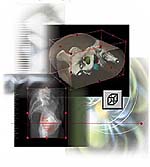
The odds of beating some cancers have improved
dramatically in recent years, thanks to new
techniques in radiotherapy, specifically 3-D
conformal radiotherapy and high-resolution
IMRT, which control tumors locally before the
disease can spread. Today, clinicians can shape a beam
to deliver a precise radiation dose to the tumor volume,
while significantly reducing the exposure of healthy organs
and tissue. This has enabled radiation oncologists to increase the
cancer-killing radiation dose directed at tumors while reducing adverse
complications.
Dose escalation studies at leading institutions show that
cure rates in some cancer patients are being dramatically improved with
the use of these advanced techniques. For example, with prostate
cancer patients at Memorial Sloan-Kettering Cancer Center
in New York, raising the radiation dose from traditional
dose levels of 64.8-70.2 Gy to 81 Gy increased the
control rate defined by biopsies of the prostate
from 55 percent to 94 percent-an almost
71 percent improvement. Using IMRT
techniques, clinicians were able to
deliver these high doses while
actually reducing the rate of
normal tissue complications
from 10 percent to 2 percent.1
|
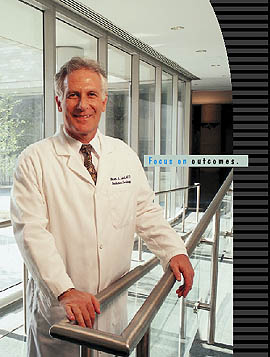 Steven A. Leibel, M.D., FACR, Chairman of the Department of Radiation Oncology, Memorial Sloan-Kettering Cancer Center
"High-dose 3-D conformal
radiation therapy has been
shown to reduce the relapse
rate for prostate cancer as
measured by PSA (prostate-specific
antigen) levels. IMRT,
an advanced form of this
conformal approach, will
permit the safe delivery of
even higher-dose levels by
sculpting the volume of high-radiation
dose around the
surrounding normal tissues."
STEVEN A. LEIBEL, M.D.
|