Yes, we can...
Improve global health by diagnosing infectious
diseases and reducing their spread
Infectious disease is the leading cause of mortality worldwide,
with the developing world contributing an overwhelming
percentage of cases of infection. Conquering these infections is a
challenge to which all segments of BD’s business are committed.
Measles kills 400,000 children every year. It can be prevented
by a vaccine–the problem is limited access. More than two
billion people are infected with hepatitis B and C. Many of these
cases are unnecessary, resulting from needle and syringe reuse–
a challenge BD addresses through its auto-disable syringes.
More than four billion vaccinations have been administered
using auto-disable syringes from the BD SoloShot family. These
syringes are now being used to deliver childhood immunizations
in India, which in 2006 became one of the last countries to
require the switch from glass syringes to auto-disable syringes.
The leading cause of death for the three million HIV/AIDS
patients who died in 2005 was tuberculosis. Yet, the most
commonly used TB diagnostic in developing countries– the
115-year-old sputum smear–is not effective in HIV-positive
patients. Rapid and accurate detection of TB in HIV/AIDS
patients is challenging even in the developed world, but the
wide availability of BD BACTEC MGIT (Mycobacteria Growth Indicator Tube) technology make it possible. It is highly sensitive
and can help make treatment more effective by determining
resistance to the drugs routinely used to treat TB. Access to this
product in the developing world is severely limited, however.
Working to change that, BD at present has placed more than
300 BD BACTEC MGIT systems in developing countries.
BD is also conducting studies with the Foundation for
Innovative Diagnostics (FIND) and the Consortium to Respond
Effectively to the AIDS TB Epidemic (CREATE) to improve the
diagnosis of sputum smear-negative TB patients co-infected
with HIV in Zambia, South Africa and Brazil.
Beyond providing advanced technologies, a commitment
to training healthcare providers is a major part of BD’s efforts.
BD has conducted Good Laboratory Practice training for more
than 1,900 lab workers in nearly 50 developing countries. This
training is critical to ensuring that CD4 testing, the primary indicator
of immune status in HIV patients, is properly performed.
BD is also training vaccinators, an occupation devoted to administering
injections in developing countries. Training improves their
knowledge and techniques and allows countries to develop
healthcare capacity.
|

|
|
In South America, Africa, Asia-
Pacific... and other regions of the world, BD
is working to improve monitoring of the
estimated
40 million people who are HIV-positive.
In South
America, the Caribbean and Mexico
alone, BD flow
cytometers and reagents are used
for CD4 cell tests
in approximately 290
laboratories running approximately
860,000 tests;
BD also provides educational support.
The BD FACSCount system is
the workhorse flow cytometer
in the developing world for CD4
testing, used to monitor immune
status and disease progression
in HIV-infected individuals.
|
|
|
In Russia... BD is partnering with the Foundation
for Innovative New Diagnostics (FIND) in a project to
deliver faster, more accurate diagnosis of TB in HIV-infected
patients and address the mounting problem
of drug-resistant strains of the disease. BD is supporting
the study–led by Professor Francis Drobniewski in
Samara, northeast of Moscow–with BD BACTEC MGIT
technology and technical assistance. Additional collaborations
to demonstrate the impact of BD BACTEC MGIT
technology are underway in Uzbekistan, Nepal and the
Philippines. Data from these projects will be presented to
the World Health Organization’s Strategic and Technical
Advisory Committee in 2007, potentially leading to significantly
broader adoption of BD BACTEC MGIT technology
in developing countries.
|
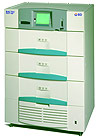
The BD BACTEC MGIT 960 System
is the world’s only automated
system for high-volume mycobacteria
growth and detection-
providing faster results that help
improve patient care and lower
healthcare costs.
|
|
|
|
The BD SoloShot family of
auto-disable syringes brings
vaccines to remote areas of the
world and prevents needle
reuse, a major source of disease
in developing countries.
In Africa... and elsewhere around the world,
BD responds to emergency healthcare needs
such as measles outbreaks. BD’s plant in
Fraga, Spain, has worked around-the-clock
to ship many millions of BD SoloShot
auto-disable devices to those who need
them within just days of notice.
|
|
|
|