 |
 |
|
Commercial real estate loans are composed of two primary categories: commercial real estate mortgages and real estate construction loans. The growth in commercial real estate lending reflects the strength of the real estate markets in AmSouth’s Southeastern markets, particularly Florida, and growth in commercial real estate loans among business banking customers. The increase, since 1996, was also indicative of AmSouth’s efforts to systematically grow the real estate portfolio while improving loan quality. Substantially all of AmSouth’s real estate growth was made up of loans to finance local home builders within AmSouth’s markets; loans for construction projects that have been presold, preleased or otherwise have secured permanent financing; and loans to real estate companies that have significant equity invested in each project and offer substantive and meaningful guarantees. Management anticipates a relatively stable balance of commercial real estate loans during 2001, compared to 2000, as loans that pay off are replaced during the year. Fulfillment of this strategy is based, in part, on continued strength in commercial real estate in AmSouth’s markets. Consumer loans primarily include home equity loans and lines of credit, dealer indirect loans, revolving credit, and other direct consumer loans, but exclude residential first mortgage loans. AmSouth’s consumer lending programs produced strong growth in 2000. Among the leading areas of growth, home equity loans and lines of credit experienced strong growth in all of AmSouth’s markets during 2000. The growth is the result of selling home equity loans and lines of credit in the branches and acquiring new customers from direct mail marketing promotions in our primary markets. Dealer indirect loans consisted primarily of loans made to individuals to finance the purchase of new and used automobiles. Dealer indirect loans on the balance sheet were lower at the end of 2000 due to the sale during the year of dealer loans to conduits and the securitization of approximately $1 billion of dealer loans. At December 31, 2000, there were approximately $793.6 million of dealer loans in conduits and $861.2 million of dealer loans outstanding which had been securitized and sold. On a managed basis, which includes loans securitized and in conduits, dealer indirect loans as of December 31, 2000, increased $496.0 million, or 12.0 percent over the 1999 level. New loan production in 2000 continued to be strong, with more than $2.5 billion in new loans originated during the year. Revolving credit, which consists primarily of bankcard outstandings, was limited in 2000 by normal portfolio runoff and more emphasis on promoting home equity loans and lines of credit. |
|
|
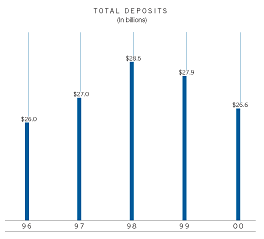
Management anticipates that in 2001 consumer loans will grow, provided the economy experiences modest growth, consumer borrowing patterns improve through 2001 and AmSouth’s strategic initiative to aggressively grow consumer banking is successful. Deposits Deposits are AmSouth’s primary source of funding, and their cost is the largest category of interest expense. There are five principal categories of deposits: noninterest-bearing demand, interest-bearing demand and money market, savings, time, and certificates of deposit of $100,000 or more. See Table 9 for the detailed amounts. Total average deposits in 2000 were $27.3 billion compared to $27.7 billion in 1999, a decline of $394.9 million or 1.4 percent. Most categories of deposits were lower during 2000, compared to 1999, primarily because consumers shifted toward higher yielding or more aggressive financial products such as mutual funds and annuities and because consumer spending and debt were higher. Also contributing to the decline were higher levels of capital spending by businesses in 2000, thereby reducing their investable assets. These factors contributed to a highly competitive market for deposits in 2000, especially among banks. A number of factors controlled by AmSouth also contributed to the decline in deposits during the year. AmSouth sold 16 branches that were outside of its primary markets with deposits totaling approximately $490 million at the time of the sales. Additionally, AmSouth aggressively managed down its “cash and due from” balances during the year and allowed certain foreign time and public funds deposits totaling $1.3 billion to run off during the fourth quarter as a result of the financial restructuring. |
|
|
|
 |
|