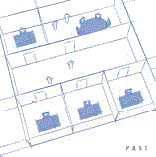
At a time when many buildings are ill-equipped to support the way people
work today, Pathways working environments make it feasible for owners
and developers to replace outdated infrastructures with one that distributes
power, communications and access to technology everywhere; is exceptionally
easy to reconfigure; and facilitates teamworking anytime anyplace.
 Pathways
working environments are also movable, so they can be depreciated on an
accelerated schedule as federal and state laws permit.
Pathways
working environments are also movable, so they can be depreciated on an
accelerated schedule as federal and state laws permit.

Imagine that you have just begun to work in a Pathways environment. The
first thing you notice is that your work space is more spacious...even
though its “footprint” is smaller. It feels inviting, welcoming,
invigorating.
Work surfaces are large and
accessible. Storage space is ample. There’s room for your files and
your gym bag. Lighting is indirect, bright but without glare, easy on
the eyes. The equipment you need—telephone, computer, modem, printer,
scanner—is within reach but not in the way. Things like your keyboard
holder and chair are easy to adjust.
Team and community spaces
give you a similar sense. The things you and your teammates need are at
hand—whiteboards, tackable walls, mobile tables, easels and files,
speakerphones, audio/visual equipment, Inter- and Intranet access, filing
cabinets.
You have the sense that whoever
created this environment knew exactly how you and your cohorts work.