1998 Annual Report
Technological Advances Expand Food Choices
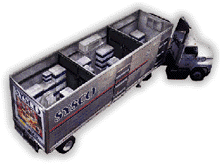 Temperature
is critical to the proper transport of products from SYSCO's warehouses
to customer locations. The fleet features 28- to 36-foot units with three
temperature-controlled compartments and highly reliable mechanical refrigeration
systems.
Temperature
is critical to the proper transport of products from SYSCO's warehouses
to customer locations. The fleet features 28- to 36-foot units with three
temperature-controlled compartments and highly reliable mechanical refrigeration
systems.
Each day the drivers of SYSCO's nearly 5,800 delivery vehicles crisscross the cities and counties of North America to deliver more than two million cases of product. From the back alley door of a small deli in Los Angeles to the loading dock of a major hospital in St. Louis, SYSCO distributes a range of 275,000 products system wide that have been transported by rail, trucked or flown from points near and far around the globe to SYSCO warehouses. That foods are shipped daily so reliably and accurately is possible only because of advances in computer technology, transportation, refrigeration and warehousing. In the 1970s, the typical fleet unit was a 12- to 16-foot truck with modest refrigeration capabilities. Frozen and dry goods were the primary commodities of the foodservice industry. Today's 28- to 36-foot, single-axle trucks typically have three separate food storage compartments with the most reliable mechanical refrigeration systems available. In one stop, SYSCO may deliver cleaning chemicals and paper products, canned and dry packaged foods, fresh meats and produce as well as frozen foods. To improve routing and ensure consistent deliveries, on-board computer systems monitor truck speeds, shifting and stops along the route. These systems not only enhance efficiency, but also improve service. In the late hours of the evening, when "selectors" are preparing orders for next-day delivery, every requested product must be available in prime condition to fulfill customer orders. In 1970, most foodservice distribution warehouses carried about 3,000 products compared with 10,000 to 16,000 now. To handle the breadth of products, SYSCO warehouse facilities average over 4 million cubic feet in size, with space divided into dry storage, freezer storage (from below zero to 20°), and cool storage of at least three temperature zones and varying humidity levels. Today's energy efficient warehouses utilize ammonia as a refrigerant instead of environmentally harmful chlorofluorocarbons (CFCs). They are also designed and built using a template that is expandable to allow for future growth as needed. Within the storage areas, special handling techniques are used to maintain appropriate product freshness. Apples are never stored next to lettuce, for example, because they produce a gas that prompts rapid spoilage of lettuce. While ensuring that customer selections are in stock, SYSCO also must monitor its own inventory investment. Overall this averages about 18 days of sales, although some traditional SYSCO locations operate efficiently with as little as 14 days inventory. Sophisticated computer systems and software help balance the inflow of products from suppliers as closely as possible with scheduled deliveries to customers. In the early 1970s, the majority of orders and invoices were written by hand. Beginning in 1978, SYSCO began working toward a more standardized system and, more recently, began implementing a new system that is currently being rolled out. Now, approximately 70 percent of SYSCO companies operate on the SYSCO Uniform System (SUS), a client-server platform that offers speed, accuracy and compatibility between warehousing, ordering and sales systems throughout North America. SUS will be in place company-wide in 1999. It incorporates not only the new SYSCO Warehouse Management System (SWMS) module, but also other measurement and reporting tools, as well as a laptop order entry system that gives marketing associates quick access to product information to ensure the highest levels of customer service. |