Slide 12 of 18
Notes:
- Another example of our data-based approach to driving sales growth is our expertise in category management, or the analysis of sales trends and the modification of retail displays to reflect the findings.
- It sounds data-intensive and it is, which is a big advantage for Robert Mondavi. Most producers don’t have the size, scale or distributor relationships to acquire, let alone process, this sales data. We do, and that means that we can provide our retail customers with valuable analysis about what is and what isn’t working on their sales floor. In other words, we can help them sell more wine and sell it more profitably.
- This is an even more attractive skill than you might think because instead of the producer consolidation you would expect in today’s fragmented and competitive market, there has instead been a proliferation of brands. Wine’s traditional three-tier distribution system ensures that even marginal brands get enough wholesaler attention to remain viable, so you end up with a situation like we have in California, with more than 1200 chardonnays and a chaotic array of brands and SKUs.
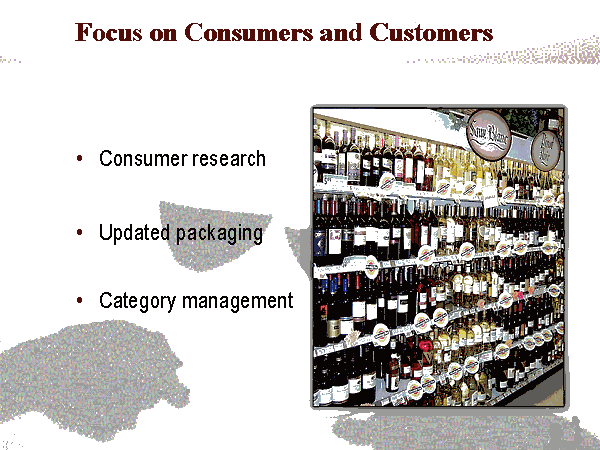
- You can see what I’m talking about in this photo [turn to screen].
- That’s a lot of different bottles to sort through. But where some might see a typical wine department shelf, what we see is an opportunity to strengthen our retail relationships. We call this the “wall of wine” – really looks cluttered, doesn’t it?
- Well, category management gives it coherence. And more selling power. Because our analysis often shows that top-selling wines like Woodbridge, Robert Mondavi Private Selection, and Robert Mondavi Winery are deserving of more shelf presence than less successful brands, our category management skills can strengthen our retail presence … and help us increase our sales.