|
We operate
in certain countries in Latin America, Eastern Europe, and
Asia/Pacific where there are limited forward foreign currency
exchange markets and thus we have unhedged exposures in these
currencies.
Most
of our international revenue and expenses are denominated
in local currencies. Due to the substantial volatility of
currency exchange rates, among other factors, we cannot predict
the effect of exchange rate fluctuations on our future operating
results. Although we take into account changes in exchange
rates over time in our pricing strategy, we do so only on
an annual basis, resulting in substantial pricing exposure
as a result of foreign exchange volatility during the period
between annual pricing reviews. In addition, the sales cycle
for our products is relatively long, depending on a number
of factors including the level of competition and the size
of the transaction. We periodically assess market conditions
and occasionally reduce this exposure by entering into foreign
currency forward exchange contracts to hedge up to 80% of
the forecasted net income of our foreign subsidiaries of up
to one year in the future. These forward foreign currency
exchange contracts do not qualify as hedges for financial
reporting purposes and, therefore, are marked to market. Notwithstanding
our efforts to manage foreign exchange risk, there can be
no assurances that our hedging activities will adequately
protect us against the risks associated with foreign currency
fluctuations.
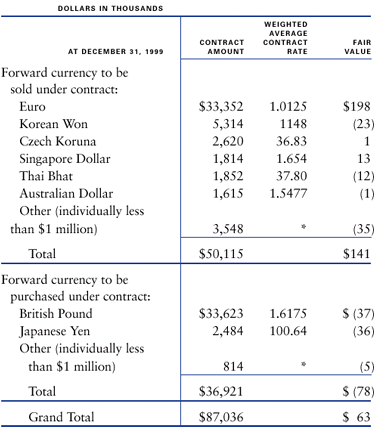
The
table below provides information about our foreign currency
forward exchange contracts. The information is provided in
U.S. dollar equivalents and presents the notional amount (contract
amount), the weighted average contractual foreign currency
exchange rates and fair value. Fair value represents the difference
in value of the contracts at the spot rate at December 31,
1999 and the forward rate, plus the unamortized premium or
discount. All contracts mature within twelve months.
Forward
Contracts
*Not
meaningful
Year
2000 Compliance
General.
Many computer systems and software products were originally
coded to accept only two-digit entries in the date code field.
These date code fields need to accept four-digit entries to
distinguish 21st century dates from 20th century dates. As
a result, computer systems and/or software used by many companies
needed to be upgraded to comply with Year 2000 requirements
prior to January 1, 2000. Prior to January 1, 2000, significant
uncertainties existed in the software industry concerning
the potential effects associated with such compliance. Now
that January 1, 2000 has come and gone with very few significant
reported Year 2000-related incidents, the level of uncertainty
surrounding such incidents has diminished.
|







