|
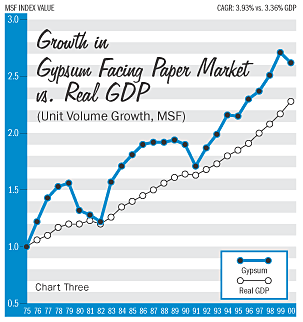 Chart
three shows the historical growth of unit volume, in terms of thousand
square feet (MSF), in the gypsum facing paper market. This is the
fastest growing, but most volatile, end-use market in which the company
participates. Over the last twenty-five years the gypsum facing paper
market has grown at a compound annual growth rate of 3.9 percent and
grew at a 4.0 percent rate over the past five years. In 2000, however,
demand for gypsum facing paper declined by 3.2 percent, representing
softness in the repair and remodel market and a decrease in new housing
starts. Chart
three shows the historical growth of unit volume, in terms of thousand
square feet (MSF), in the gypsum facing paper market. This is the
fastest growing, but most volatile, end-use market in which the company
participates. Over the last twenty-five years the gypsum facing paper
market has grown at a compound annual growth rate of 3.9 percent and
grew at a 4.0 percent rate over the past five years. In 2000, however,
demand for gypsum facing paper declined by 3.2 percent, representing
softness in the repair and remodel market and a decrease in new housing
starts. |
|
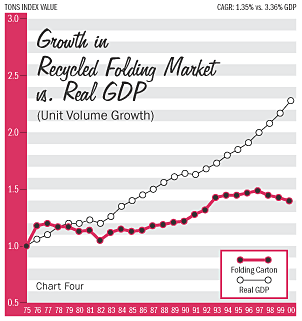 Chart
four shows the historical growth trend in the recycled folding carton
and set-up box market. The recycled folding boxboard market is the
largest market in which the company participates, representing approximately
3.0 million tons of demand in 2000. Over the past twenty-five years
this market has grown by approximately 1.4 percent per year. Over
the last five years, however, demand has softened and unit volume
declined by an average of 0.7 percent. In the year 2000 this softness
was more pronounced, with demand declining 2.2 percent. The past years’
decline in consumer sentiment and the growth in the merchandise trade
deficit have been the major contributors to reduced volume in recycled
folding boxboard. Chart
four shows the historical growth trend in the recycled folding carton
and set-up box market. The recycled folding boxboard market is the
largest market in which the company participates, representing approximately
3.0 million tons of demand in 2000. Over the past twenty-five years
this market has grown by approximately 1.4 percent per year. Over
the last five years, however, demand has softened and unit volume
declined by an average of 0.7 percent. In the year 2000 this softness
was more pronounced, with demand declining 2.2 percent. The past years’
decline in consumer sentiment and the growth in the merchandise trade
deficit have been the major contributors to reduced volume in recycled
folding boxboard. |
|
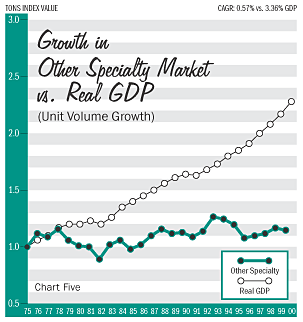 Chart
five provides an historical perspective of the unit volume growth
in the “other specialty” products segment of the recycled
boxboard market. This market, on average, grew at a 0.6 percent compound
annual growth rate over the past twenty-five years; however, the change
in demand within the various niches that make up this market has been
quite volatile. Over the last five years this market has declined
by an average of 0.8 percent per year and in 2000 declined by 1.4
percent. Consumer non-durable consumption dominates end-use demand
for this market and the 2000 weakness in this sector is the primary
reason for this market’s softness. Chart
five provides an historical perspective of the unit volume growth
in the “other specialty” products segment of the recycled
boxboard market. This market, on average, grew at a 0.6 percent compound
annual growth rate over the past twenty-five years; however, the change
in demand within the various niches that make up this market has been
quite volatile. Over the last five years this market has declined
by an average of 0.8 percent per year and in 2000 declined by 1.4
percent. Consumer non-durable consumption dominates end-use demand
for this market and the 2000 weakness in this sector is the primary
reason for this market’s softness. |
5
|
 |
|
|


 PREV
PREV
