|
|
|


|
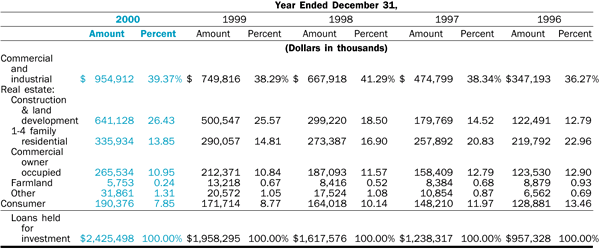
Impact of Inflation The effects of inflation on the local economy and on the Company’s operating results have been relatively modest for the past several years. Since substantially all of the Company’s assets and liabilities are monetary in nature, such as cash, securities, loans and deposits, their values are less sensitive to the effects of inflation than to changing interest rates, which do not necessarily change in accordance with inflation rates. The Company attempts to control the impact of interest rate fluctuations by managing the relationship between its interest rate sensitive assets and liabilities. See ‘‘Condition—Rate Sensitivity and Liquidity" below. Loans Held for Investment Loans held for investment were $2.43 billion at December 31, 2000, an increase of $467.2 million, or 24% from December 31, 1999. Loans were $1.96 billion at December 31, 1999, an increase of $340.7 million, or 21% , from $1.62 billion at December 31, 1998. During the past 5 years loans have grown at an annualized rate of 20%. This growth is consistent with the Company’s strategy of targeting corporate ‘‘middle market" and private banking customers and providing innovative products with superior customer service. This plan also includes establishing new branches in areas that demographically complement existing or targeted customer base, pursuing selected mergers/ acquisitions which will add new markets, delivery systems and talent to the Company and leveraging new or existing technology to improve the profitability of the Company and its customers. The following table summarizes the loan portfolio of the Company by major category as of the dates indicated:
The primary lending focus of the Company is on small-and medium-sized commercial, construction and land development, residential mortgage and consumer loans. The Company offers a variety of commercial lending products including term loans, lines of credit and equipment financing. A broad range of short-to medium-term commercial loans, both collateralized and uncollateralized, are made available to businesses for working capital (including inventory and receivables) , business expansion (including acquisitions of real estate and improvements) and the purchase of equipment and machinery. The purpose of a particular loan generally determines its structure. |