| |
|
|
|
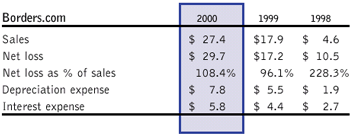
Depreciation and amortization expense increased in 2000 and 1999 as a result of the depreciation expense recognized on new stores’ capital expenditures. Interest expense decreased in 2000 and 1999 due to lower average borrowing levels.
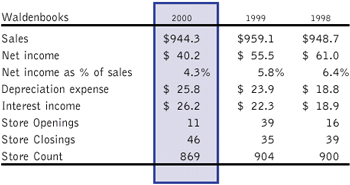
The decrease in Waldenbooks sales in 2000 is primarily the result of the decrease in store count during the year, coupled with a comparable store sales decrease of 2.9%. The increase in sales in 1999 is primarily the result of an increase in store count during the year, coupled with a comparable store sales increase of 0.7%. Net income decreased in 2000 primarily as a result of decreased sales and a $7.8 million after- tax asset Depreciation ment charge primarily related to 103 underperforming stores. Net income in 1999 decreased due to a lower gross margin resulting from increased store occupancy expenses. As a percentage of sales, net income for 2000 decreased primarily due to the asset impairment charge and a decrease in gross margin percentage. This was due to increased promotional costs as a percentage of sales, and higher distribution and store occupancy costs as a percentage of sales resulting from the smaller store base and lower sales volume. Net income and net income as a percentage of sales decreased in 1999 primarily due to a lower gross margin percentage resulting from a change in sales mix to lower-margin, best-seller merchandise and increased store occupancy expenses. Depreciation expense increased in 2000 and 1999 as a result of the depreciation expense recognized on new stores’ and refurbished stores’ capital. Interest income increased in 2000 and 1999 as a result of Waldenbooks’ continued positive cash flow in the years presented.
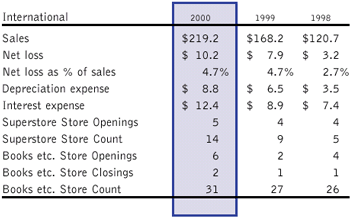
The increases in International sales for 2000 and 1999 are primarily the result of new superstore openings and comparable store sales increases. In 2000, the Company opened three additional stores in the United Kingdom, one additional store in Australia, and the Company’s first store in Puerto Rico. In 1999, three stores were opened in the United Kingdom, as well as the Company’s first store in New Zealand. Net loss for 2000 increased as a result of higher depreciation and interest expense, partially offset by increased operating income generated from the maturation of the prior years’ store base. Net loss for 2000 as a percentage of sales remained flat to the prior year. The addition of four new stores in 1999, nearly doubling the superstore count, led to an increased net loss from the prior year. Similar factors led to the change in net loss as a percentage of sales for 1999. Depreciation and amortization expense increased in 2000 and 1999 as a result of the depreciation expense recognized on new stores’ capital expenditures. Interest expense increased in 2000 and 1999 due to higher average borrowing levels necessary to finance investments in new stores. Foreign currency transaction gains (losses) were $(0.8) million, $0.2 million, and $0.3 million in 2000, 1999, and 1998, respectively.
|
| |
|
|