|
Strategic
foresight was fundamental to Winston in 2000. In a year
characterized by market uncertainty, Winston and the hotel
REIT sector in general faced several market-related
pressures and challenges: rising interest rates, reduced
availability of capital and a flattening real estate
market. Given this environment, Winston achieved the
following operating results: FFO reached $31.3 million, or
$1.72 per share, which exceeded our expectations set at
the beginning of the year by $0.01. The growth in our
fee-based revenues helped the Company maintain consistent
operating results as well as a constant annualized
dividend of $1.12, even as some of our peers were
compelled to cut their dividends. Although market
conditions were not favorable for growth, we have begun to
experience some success in developing additional sources
of income. These include a 49% ownership interest in three
joint venture projects through which we have earned, and
continue to earn, fees from development, design and asset
management services. We also have formed a strategic
alliance to co-develop two additional hotels, where
Winston also has provided mezzanine financing.
Winston’s
portfolio of assets at year-end included 49 operating
hotels with 6,723 rooms in 12 states and a 49 percent
ownership interest in three joint ventures which own two
operating upscale hotels and a third under development. We
work continually to move our portfolio toward newer,
upscale hotels through the rehabilitation of existing
properties or otherwise through divestiture and judicious
reinvestment. While some of the portfolio’s upscale
hotels, such as the Hilton Garden Inns, were able to
generate a 10 percent RevPar increase for the year, there
also remain older, limited-service properties that
generated only modest growth. The performance of these
assets does not satisfy us, and we will continue to look
for ways either to improve their operating results or to
sell these properties. The geographic distribution of our
assets, while still weighted in the Southern Atlantic
states, increasingly has become diversified as management
looks to initiate a greater number of projects in the
United States’ North Eastern, Middle Atlantic and
Pacific regions. The Company’s integrated strategy is to
continue with the accumulation and development of new and
geographically diverse, upscale projects, while improving
or selling older, limited-service properties. Moreover,
the Company’s strategy includes initiating relationships
which enable us to leverage our internal strengths
regarding development and financing services.
 The
Company’s integrated strategy is to continue with the
accumulation and development of new and geographically
diverse, upscale projects, while improving or selling
older, limited-service properties. Moreover, the Company’s
strategy includes initiating relationships which enable us
to leverage our internal strengths regarding development
and financing services. The
Company’s integrated strategy is to continue with the
accumulation and development of new and geographically
diverse, upscale projects, while improving or selling
older, limited-service properties. Moreover, the Company’s
strategy includes initiating relationships which enable us
to leverage our internal strengths regarding development
and financing services.
Two of the
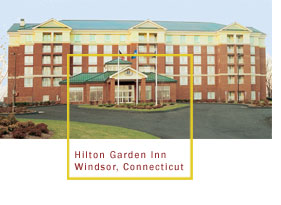
three joint-venture upscale hotels opened during 2000. The
first was the 158-room Hilton Garden Inn in Windsor,
Connecticut, developed in partnership with Regent
Partners, Inc. The second was the 118-room Jacksonville
Hampton Inn at Ponte Vedra
Beach, Florida, which was developed with Marsh Landing
Investment, LLC. In addition to these, Winston has
commenced construction of its third joint venture
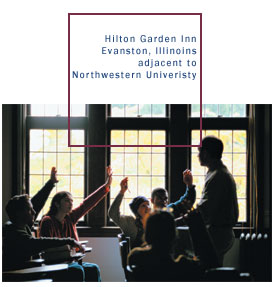
property, a 175-room Hilton Garden Inn in Evanston,
Illinois, which is scheduled to open in July 2001. The
upscale Hilton is adjacent to the campus of Northwestern
University.
Investment
only constitutes the first part of Winston’s involvement
in these projects. Our joint venture agreements also
enable Winston to earn fee income through management’s
in-house development and asset management capabilities.
Arrangements such as these allow us to exploit our core
capabilities, which become an especially important
resource when market conditions are less certain. The
resilience and foresight implicit in this strategy
highlight one of Winston’s central goals: to increase
shareholder value by creating and maintaining additional
sources of income.
Winston
entered into a strategic alliance in 2000 with Noble
Investment Group, Ltd. for the specific purpose of
developing projects requiring both mezzanine debt and
consulting services.
Noble is a leading private hotel company that, together
with Winston, is developing two Hilton Garden Inns in
Atlanta, GA and Tampa, FL. In addition to these locations,
we also intend to explore projects in other key markets
including Princeton, NJ, and Chapel Hill, NC.
Mezzanine
financing capabilities bring Winston distinctive market
advantages. A mezzanine loan provided by a managing member
of the project, like Winston, typically
bridges the gap between equity invested and senior debt by
providing 10%-15% of the project’s all-in cost through
debt. Not only does this create a lending asset with its
associated financing fees, but also it creates project
management fees, thus enhancing the Company’s FFO. To
date, such project fees already have offset the loss of
hotel revenue due to the sale of two under performing
hotels during 2000.
Winston’s
financial foresight has produced one of the most
conservative capital structures in the industry. Our
year-end outstanding debt level was 37% of the undepreciated
cost of total assets. EBITDA at year-end was 3.9 times
interest costs. The Company also announced an interest
rate swap in December 2000, which fixes our interest rate
on $50 million of debt at a rate of 5.915% until December
18, 2002. This results in an effective interest rate of
7.365% on $50 million after considering the 1.45% interest
rate spread provided for in our line of credit. The
transaction, coupled with our $69 million of outstanding
securitized debt bearing an interest rate of 7.375%,
effectively locks in approximately 70% of the Company’s
outstanding debt at very attractive rates.

|
Looking
beyond 2000, Winston plans to incorporate its more recent
sources of revenue and growth through projects that
generate development, design, purchasing and financing
fees, with the solid, long-term outlook into the "futuresites"
that drive our business. |
Meristar
Hotels and Resorts, Inc. currently leases 48 of the 51
hotels the Company either owns or holds an interest in
through joint ventures. As we mentioned throughout 2000,
in advance of the recent effective date of the REIT
Modernization Act, the Company and Meristar
held discussions regarding the Company’s acquisition of
the Meristar leases. After carefully considering all
aspects of the proposed transaction, |
Winston
believes that it is not in the best interest of its
shareholders to
acquire all of the leases at this point. The Company and
Meristar will continue to work closely together for the
benefit of the operations
of our hotels. Moreover, we have agreed with Meristar to
leave open the possibility of future discussions regarding
the Company’s acquisition of some or all of the leases
at the appropriate time.
 During
the year, the Company sold two under performing limited
service assets and used the proceeds to generate greater
returns through reinvesting the proceeds in joint venture
projects and mezzanine loans. This strategy is in line
with the Company’s 2001 strategy, which is to continue
its efforts to enhance shareholder value by focusing on
newer, upscale properties, and to generate additional
sources of revenue by capitalizing on our in-house core
competencies relating to development and financing
activities. During
the year, the Company sold two under performing limited
service assets and used the proceeds to generate greater
returns through reinvesting the proceeds in joint venture
projects and mezzanine loans. This strategy is in line
with the Company’s 2001 strategy, which is to continue
its efforts to enhance shareholder value by focusing on
newer, upscale properties, and to generate additional
sources of revenue by capitalizing on our in-house core
competencies relating to development and financing
activities.
Looking
ahead to 2001, Winston again expects to meet or exceed its
operations and strategic goals through maintaining its
principles of foresight and futuresight. As in the past,
we appreciate the confidence you have expressed in the
Company’s future. While economic conditions affecting
our sector continue to challenge us, we are gratified by
the effectiveness of our response to current conditions.
We appreciate your continuing loyalty and support and look
forward to 2001 and beyond.
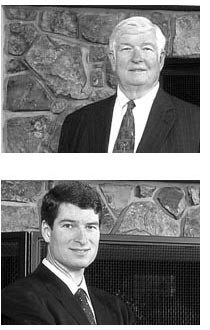
Charles M. Winston
Chairman of the Board
Robert W. Winston,
III
Chief Executive Officer
|



