| Letter to Shareholders |
page 4/5 |
 |
 |
 |
|
 LEVERAGE OUR APPROACH FOR COMPETITIVE ADVANTAGE
We consider Bunge's operating model-decentralized and integrated at the same time-to be a competitive advantage, and
we are committed to it.
Decentralization has power. By entrusting our local management to make decisions
we promote agility and ensure proximity to customers and farmers. Throughout Bunge's recent history this approach has paid dividends in the form of opportunities seized, acquisitions made and relationships strengthened. But integration is essential.
It lies at the heart of Bunge's larger value proposition-a global company with operations
that stretch from farm to retail shelf and that benefit economically and operationally from each other.
The key is striking the right balance between the two-to do globally what needs to be done globally, and to leave the rest to local managers. This balance is dynamic. It shifts with changes in the company and marketplace.
We benefit from this approach.
For example, in 2006 we began a reorganization
of our agribusiness operations, shifting them to a more integrated structure that allows for greater coordination. We established
global product line teams that manage product flows and risk for each major commodity. The teams are composed of executives from around the world, working in their respective regions, but linked together and charged with leveraging their combined perspectives to maximize the profitability of our total value chain. In 2007, a coordinated grains team was able to recognize points
on the chain where we could create greater value. And we did.
FINANCIAL DISCUSSION
2007 was a strong year for Bunge and its shareholders. Total segment operating profit increased 162% and net income 49% when compared to 2006. Return on shareholders' equity reached 14%, and we approved a 6.25% increase in dividend payments to common shareholders.
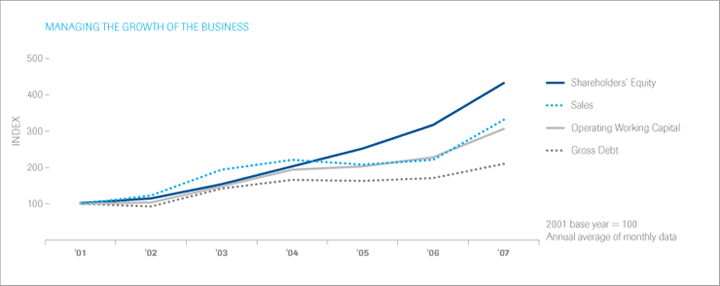
One of the facts of life in a high-priced environment like the one we saw in 2007 is the additional demand that it places on our financial resources. There is a clear relation among larger volumes, higher commodity prices and greater working capital requirements.
Bunge's cash flow used by operations was $411 million in 2007. The largest portion of the increase in cash used by operations was an increase in operating working capital, and a large portion of that resulted from higher readily marketable inventories-the commodity products we buy, store, process and sell to customers.
While this reality can be a competitive advantage to larger firms with strong balance sheets, it does require careful financial management. Bunge has managed its growth effectively, and we are committed to maintaining our investment grade credit rating. We are implementing new methods of managing our cash flow to enable us to continue to improve our ability to operate competitively in environments like the one we are seeing today.
|
|

![[HOME]](images/nav/home.gif)

![[FINANCIAL HIGHLIGHTS]](images/nav/fin_highlights.gif)
![[LETTER TO SHAREHOLDERS]](images/nav/ltr_shareholders.gif)
![[FORM 10K]](images/nav/form10k.gif)
![[SHAREHOLDER INFO]](images/nav/shareholder_info.gif)