| |
 |
< Previous
Page
At OSI, we are working to expand our knowledge of how a normal cell
turns into a cancer cell. We now understand that this involves aberrations
in the cell signaling pathways that control cell proliferation,
apoptosis (programmed cell death), angiogenesis (the process of
blood vessel growth), invasion and metastasis. We have therefore
focused our targeted programs on these cellular processes.
Signal transduction is the complicated process by which signals,
including growth stimulatory signals, are transmitted to the nucleus
of a cell regulating the growth and activity of that cell. In the
case of cancer, the normal patterns of signal transduction are disrupted.
At OSI, we are focused on the development of agents that will ameliorate
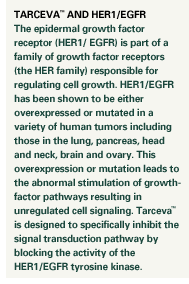
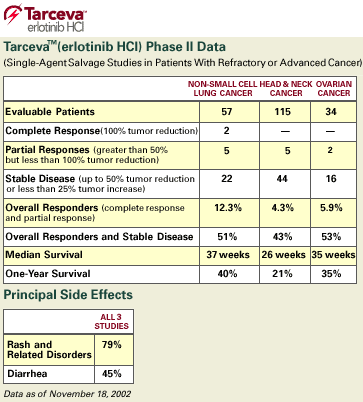
the resulting aberrant signaling. Tarceva™ is an example of
a drug designed to inhibit aberrant HER1/EGFR signaling. HER2 (epidermal
growth factor receptor 2) is an oncogene that, when functioning
normally, regulates cell growth. However, overexpression of HER2
has been correlated with aggressive cancer growth, particularly
in metastatic breast cancer. Approximately 25–30% of all women
with metastatic breast cancer overexpress HER2.
As part of our long-standing discovery collaboration with Pfizer
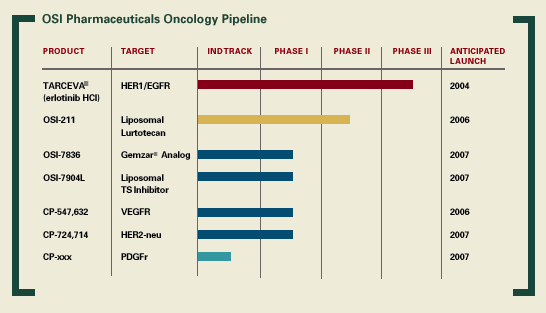
Inc., we co-discovered CP-724,714, a potent and selective oral inhibitor
of HER2. Although the funded phase of our collaborative research
with Pfizer has concluded, Pfizer has continued to develop drug
candidates that originated from that collaboration. CP-724,714 is
currently in Phase I clinical trials.
We believe the ability to safely and effectively
inhibit the process of angiogenesis continues to represent one of
the most intriguing opportunities in cancer research today. Angiogenesis
is the process of blood vessel growth and has been shown to play an
important role in the development and spread of cancer. It has been
firmly established that in order for a tumor to grow, it must develop
its own blood supply. The induction of angiogenesis is mediated by
the production of many growth factors including vascular endothelial
growth factor (VEGF). This factor binds to the VEGF receptor (VEGFR),
a key receptor tyrosine kinase involved in regulating blood vessel
growth. CP-547,632, a potent and selective inhibitor of VEGFR, is
presently in Phase I clinical trials. This agent was also discovered
as part of our cancer discovery program with Pfizer, who is developing
the product.
At OSI, we are also studying apoptosis, or programmed
cell death. Normal cells undergo tightly controlled or programmed
death, which is often pathologically prevented in cancer cells. We
are currently researching the mechanisms that underlie the ability
of certain cells to avoid apoptosis and contribute to tumor growth
by promoting cell survival. |