
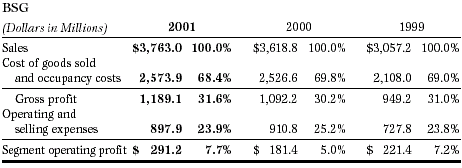
Sales in our BSG segment grew 4% in 2001 and 18% in 2000. Adjusting fiscal 2000 to a 52-week basis, sales increased 6% in 2001. While sales increased for the year, the rate of growth for both contract and commercial business declined over the course of the year, consistent with the slowing U.S. economy. Sales in the western U.S. displayed the greatest decline following the general slowdown in the technology services sector. The growth in 2000 sales reflects an increase in our large business customer base and significant growth in our Internet business. We expect continued growth in our Internet sales during 2002 as we allocate additional resources to that sales channel. Machine supplies include laser, inkjet, and copier supplies, and increased 16% in 2001 and 27% in 2000. General office supplies and paper sales also increased in both periods. Technology-related sales are a smaller part of BSG sales, but they declined in 2001 after showing some gains in 2000. Office furniture sales declined 11% in 2001.
Gross profit was enhanced during 2001 as we maintained stricter adherence to volume-dependent pricing arrangements. We earn higher gross profit percentages in our BSG than in our retail operations principally as the result of lower occupancy costs and a relative sales mix with fewer technology products. Paper, machine supplies, and other general office supplies, which yield higher margins than our other product groups, account for a much larger percentage of total sales in our BSG than in our stores. However, BSG’s gross profit percentages are lower than in our International Division as a result of the lower relative pricing we negotiate with our contract customers.Contributing to the decrease in our BSG’s gross profit from 1999 to 2000 was an increase in paper costs, coupled with reduced prices for paper products, ink and toner in response to competitive pressures. Further, these products increased in our product mix, which compounded the negative impact on gross profit.
The 2000 comprehensive business review also covered operations of BSG and included a number of initiatives to improve delivery operations, lower warehouse costs and improve customer satisfaction. Included in fiscal year 2000 results are net charges of $10.9 million for inventory adjustments, sales returns and allowances, and facility closure costs. No similar charges or credits were recorded in 2001. During 2001, on-time deliveries, order fill rates and quality index calculations all increased, and customer complaints decreased significantly.
Personnel, facility and delivery expenses are the largest components of our BSG operating expenses. Operating and selling expenses as a percentage of sales decreased in 2001 primarily from reduced personnel and outside labor costs. Call center modifications and warehouse efficiency programs were significant contributors to lower personnel-related costs. Delivery costs decreased as we lowered our use of third-party vendors and added technology to streamline operations. Advertising expenses increased in 2001 as we received lower cooperative advertising payments from participating vendors. Operating and selling expenses as a percentage of sales are significantly higher in our BSG than in our North American Retail Division, principally because of the need for a more experienced and highly compensated sales force that directly calls on our BSG customers. In 2000, operating and selling expenses increased over 1999 primarily as a result of higher delivery costs arising from increased rates charged by third-party carriers, and from personnel-related expenses associated with our warehouse staff. Furthermore, a larger workforce was required to handle the execution of our warehouse integration plans. During the transition into integrated facilities, we incurred certain incremental expenses related to preparing for the increased volume of deliveries and the dual-brand fulfillment in the newly integrated facilities. During 2002, we anticipate two new distribution facilities, one in Atlanta and the other in Baltimore, to replace outdated facilities, which have reached capacity. These new facilities are expected to enhance our ability to grow in these two important markets.



