18
17
Barclays CEO Energy-Power Conference
Paal Kibsgaard
The creation of a unified R&E organization in 2008 was done with two clear goals in
mind. First, to better leverage the scale of our R&E efforts, given the similarity in work
scope challenges and capabilities between our various product lines and our 125 product
development centers. And second, to create an effective vehicle that would allow us to
undertake a complete upgrade of our R&E methodology and practices to significantly
increase the return on the 1.2 billion dollars we spend on product development each year.
Five years later, we have largely completed the transformation of the R&E organization by
creating a unified global structure where engineering, manufacturing and field support
work together closely, spanning centers and product lines, and we have re-defined and
fully implemented a new product development operating system.
This new system, based on best practices from the leading engineering and manufacturing
companies in the world, covers all aspects of our product development efforts including
design methodologies, test and qualification principles, manufacturing techniques, as
well as the capture and use of data from our field operations. These practices include
a combination of LEAN and Six Sigma principles that have driven reliability and
performance in high-technology industries such as automotive and aerospace. Our new
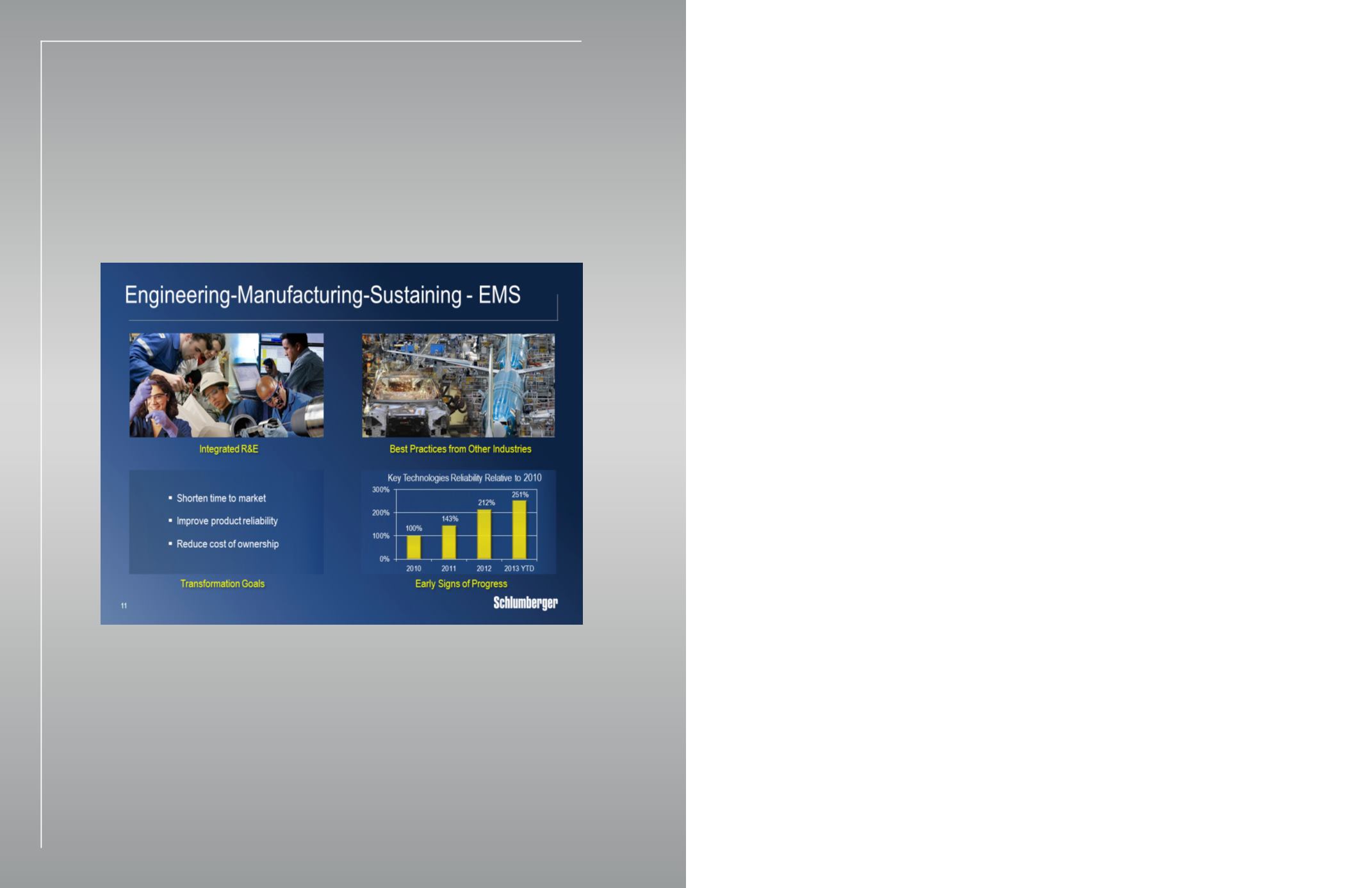
product development system is focused on driving performance in three principal
directions: shorten product development time; improve product reliability; and reduce
the total cost of ownership for all of our products.
Over the past five years we have invested some $300 million in the transformation of our
R&E organization. In the coming years we expect to reap the returns of this investment
by commercializing products that have been developed under the new system. It will
still take a few years for this transformation to deliver its full impact on our operational
performance, however we are already starting to see some very promising signs.
Since 2010 we have been tracking the performance of 28 key technologies that have
benefited from some of these new practices, with the average reliability among this group
of technologies increasing by more than 250%. Still, the real impact on performance and
results will be seen in the coming years.


