16
15
Barclays CEO Energy-Power Conference
Paal Kibsgaard
So in 1998, with our offering having reached seven product lines, we made the move to
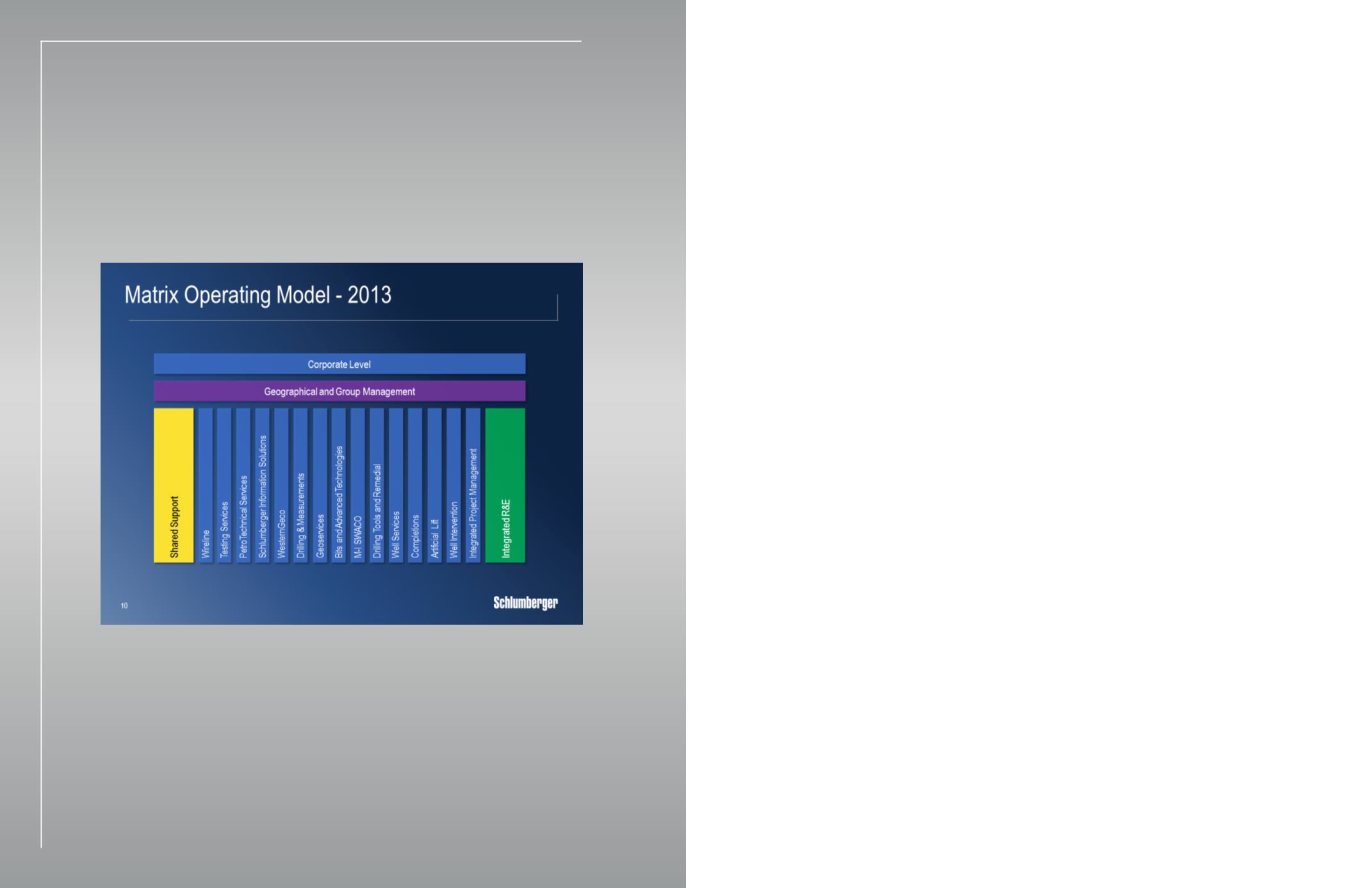
a matrix organization. In this structure, the product lines are still the center of the
organization and remain in charge of the technology portfolio, sales and resource
management, as well as product and service delivery. To complement this product line
structure, we introduced the geographic organization, responsible for customer-interface
coordination, multi-product line opportunities, managing the main support functions,
as well as providing general business oversight.
In order for this structure to be effective, we transferred some of the decision-making
power from the product lines to the geographic organization. Striking the proper power
balance and establishing the required trust and teamwork between the various parts
of the organization was a significant challenge, but through a steadfast commitment to
this structure over the past 15 years we have achieved considerable success.
Following this initial move to the matrix organization, we created a unified R&E
organization in 2008, combining all activities relating to engineering, manufacturing,
and field support from the various product lines. And in 2010, with our 15 product lines
following the Smith and Geoservices transactions, we also created a unified Shared
Services Organization, combining all the support activities that were still part of the
individual product line operations.
Through this evolution we have now created a platform which, together with an upgrade
of our work processes and operating systems, will enable us to fully leverage our size
advantage and to create a further step-change in our overall performance.
We are pursuing this prize by executing a corporate transformation program. This multi-
year program, to cover all parts of the company, is still in its early stages. So let’s look a bit
closer at the various components of this program, starting with the R&E side.


