| Fernald K-65 Silos 1 & 2 Treatment Reaches Halfway Mark |
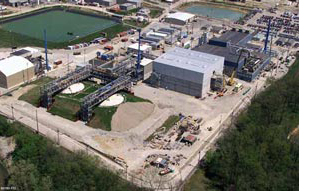 Duratek is part of the Fluor Fernald team that reached the halfway point in the high-profile silo waste treatment project on the U.S. Department of Energy’s (DOE) 1,050-acre Fernald Site, a former uranium production plant located in southwest Ohio. The 1,790th canister of treated waste (silo residues blended with cement and flyash) was filled on November 10, 2005. Plant operators anticipate less than 4,000 canisters will be needed to treat the 8,900 cubic yards of radium-bearing residues once stored in two earthen-bermed concrete silos. The K-65 Silos (1 and 2) have been a concern of neighboring communities for over two decades, as it was the highest point source of radon in the U.S. “Originally we were looking at 7,000 containers of treated residues to complete the project for the cleanup of the K-65 Silos,” said Fluor Fernald Closure Project Director Con Murphy. “We were able to draw from the world-class engineering expertise of Fluor Corporation, Jacobs Engineering Group, Duratek, and NFS, and field support from Wise Services to improve system operations.” Due to increased container waste loading, more than $27 million have been saved over the course of this project in materials, transportation, and storage costs alone. The K-65 Silos 1 and 2 Treatment Facility began operations in May 2005. At the time it was being built, the treatment facility was the largest ongoing construction project in Cincinnati. Inside, approximately 4,300 pounds of residues are blended with flyash and cement to create a 15,000-pound batch that is gravity-fed into canisters beneath the mixers. Laser-guided equipment positions each 4,000-pound, half-inch-thick steel canister and rivets a lid into place once the container is full. Canisters are shipped two at a time on specially designed flatbed trucks to Waste Control Specialists (WCS) in Texas for storage. Operators process waste 24 hours a day, seven days a week. On a typical day, 20 to 30 canisters of waste are produced through three treatment lines. Workers carefully monitor the residue/grout blending and loading operations through a shielded control room. “We designed the treatment systems to be automated as much as possible, but it is still up to the operators and maintenance personnel to make them hum,” said John North, Duratek Senior Project Manager on site. “We wanted to be sure the employees knew in advance how the key systems would function, so we built—at our facilities in Tennessee—a full-scale mock-up known as the Integrated Test Program (ITP) facility. This project has been an excellent team effort, and Duratek’s process experience has been a key ingredient.” Treatment and shipping operations are expected to be complete in early March 2006, at which time the treatment facility and support structures will be demolished. Environmental technicians will certify the area beneath and around the Silos project meets established soil cleanup levels. Today, 70% of the entire site has been certified clean by Fluor Fernald environmental restoration technicians with oversight from the State of Ohio and the U.S. Environmental Protection Agency (see photo below). Fluor Fernald expects to complete the cleanup, soil certification, and site restoration by summer 2006—well ahead of the target completion date for the project. |

Vol.1 No.3
Fall 2005
(past issues)
Fall 2005
(past issues)