


















 ales
of telecommunications test systems increased about 20 percent in 1998.
The year also saw the 4TEL subscriber loop test system pass a major milestone,
as the total number of telephone lines tested by the system crossed the
100 million mark, an event properly celebrated in England at BT. The total
4TEL line population in fact now exceeds 110 million, and counting. No
product in Teradyne’s history has enjoyed as long a run or seen as
widespread acceptance.
ales
of telecommunications test systems increased about 20 percent in 1998.
The year also saw the 4TEL subscriber loop test system pass a major milestone,
as the total number of telephone lines tested by the system crossed the
100 million mark, an event properly celebrated in England at BT. The total
4TEL line population in fact now exceeds 110 million, and counting. No
product in Teradyne’s history has enjoyed as long a run or seen as
widespread acceptance.
Of course, today’s 4TEL II system embodies technology not dreamed of in the original. The hardware is faster, the software more powerful. The new system can define a telephone line’s “footprint,” including its overall length, a matter of pressing importance as lines are stressed as never before, and it can identify “customer premise equipment” (e.g., a telephone) as the source of a problem. Most important of all, 4TEL II is an “expert” system, capable of learning as it gathers experience in a given environment.
Telephone operating companies have long purchased 4TEL equipment for two basic reasons: to improve the quality of service and to reduce maintenance costs. Now there is a third, more powerful motivator: pressure to increase bandwidth. Phone lines that were initially strung to carry voice conversations with reasonable but not exceptional fidelity are now required to serve as high-speed data links between the customer’s computer modem and the world of the Internet. A long list of compression techniques and devices have been developed to increase the effective bandwidth of various Internet elements, but it is still at the twisted pair of copper lines that the rubber meets the electronic highway. So telephone companies the world over lavish attention on these venerable lines, analyzing them under the 4TEL microscope to see how they will handle the new traffic.
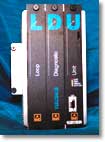
To deal with these bandwidth issues, the Telecommunications Division developed a new Loop Diagnostic Unit (LDU), which was introduced and first shipped in 1998. The LDU test head, now installed on 7 million lines in Europe, is a software-based system, which means that it can be field-upgraded through simple computer downloading. Built around a high-speed backplane, it is also ready to serve as a platform for a series of broadband test units (ADSL, ISDN, etc.) under development.